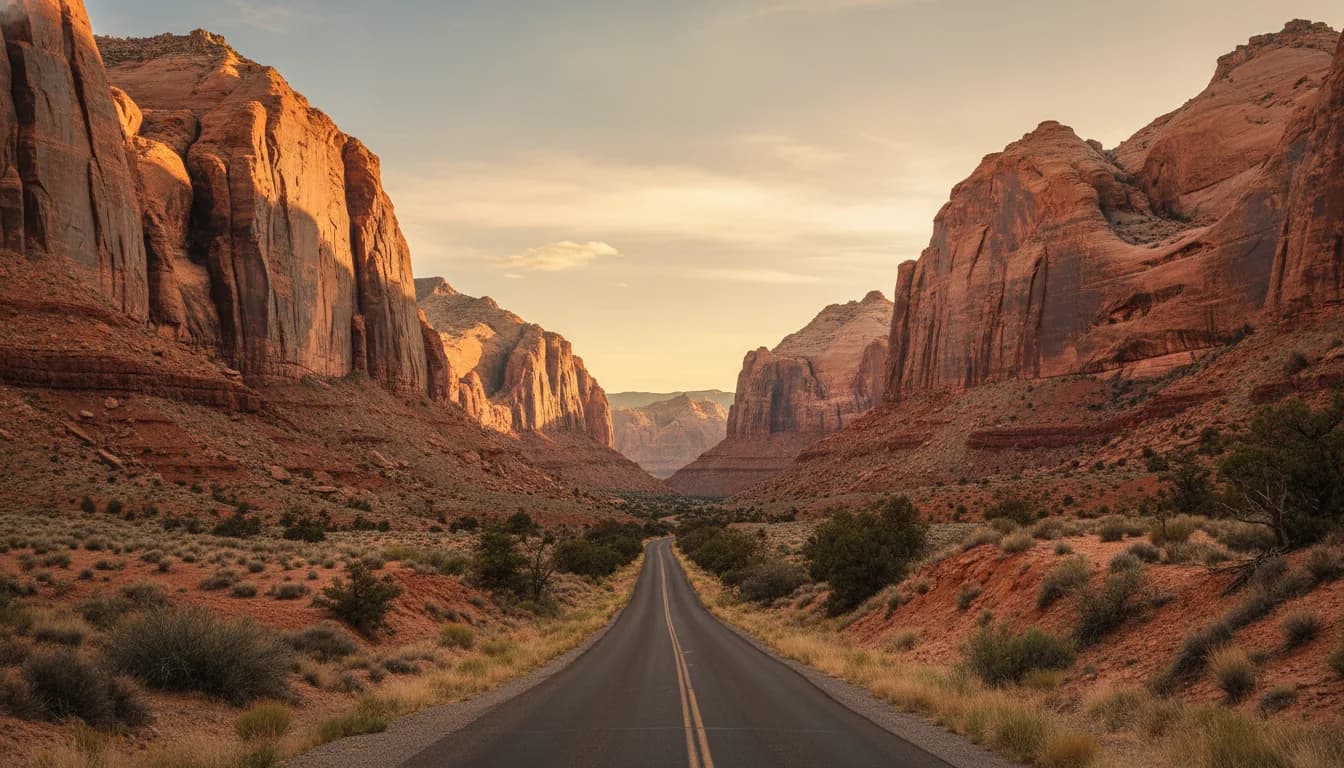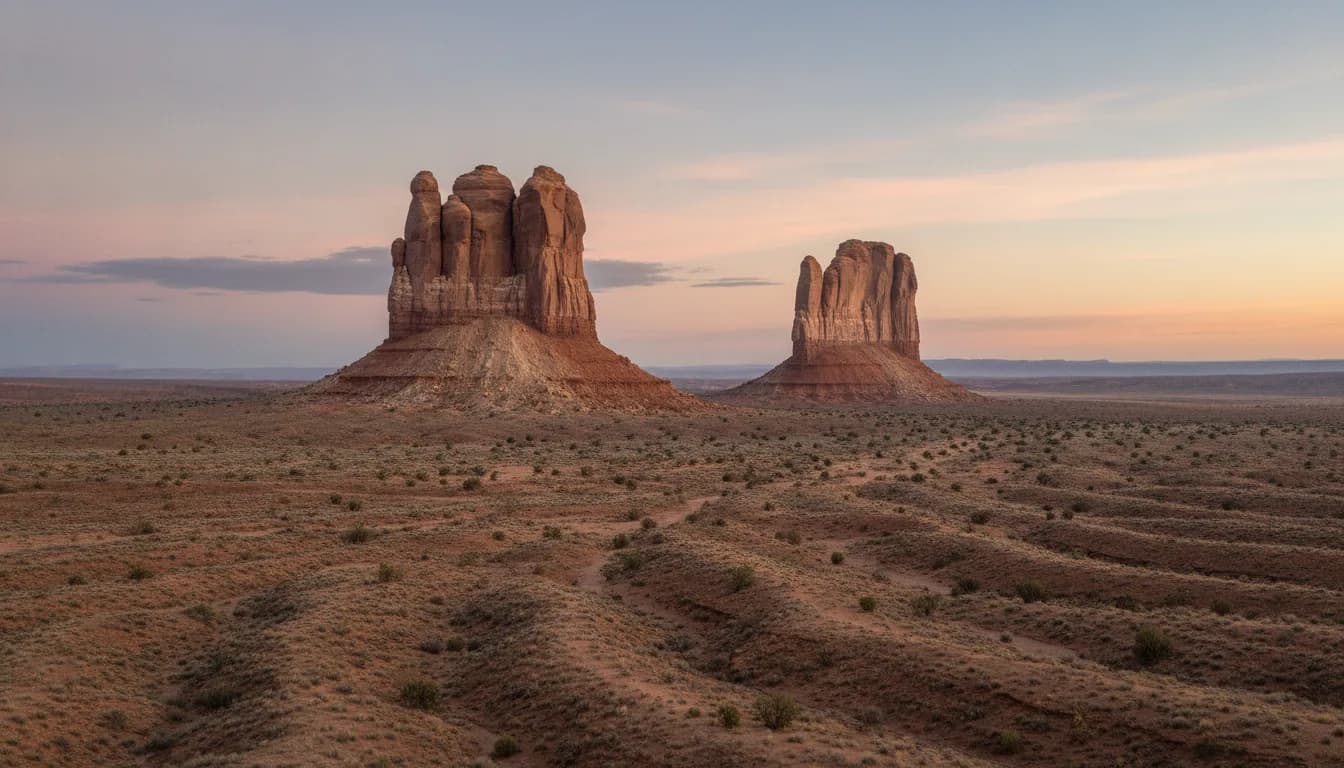
The Cathedral Valley Loop is a 57.6-mile dirt road circuit through the remote northern district of Capitol Reef National Park. The National Park Service says it takes 6 to 8 hours, requires a high-clearance vehicle, and begins with a ford of the Fremont River. There is no water, no fuel and usually no cell signal anywhere on it. In exchange you get the Temples of the Sun and Moon, Glass Mountain, a 200-foot sinkhole, and a valley of sandstone monoliths that most park visitors never see.
This is not a scenic drive in the ordinary sense. It is a backcountry day trip that happens to be done by vehicle, and it rewards being planned like one. We run lodging in Teasdale, about 20 minutes from the park entrance, and Cathedral Valley is the one park trip we tell guests to give a whole day and a full tank.
Why It Is Worth a Full Day
Capitol Reef gets a fraction of the visitors Zion does, and Cathedral Valley gets a fraction of Capitol Reef's. The northern district holds free-standing Entrada Sandstone monoliths hundreds of feet tall, spread across open desert valleys where you can often watch light move for an hour without seeing another vehicle.
The catch is built into the geography. The loop is long, slow and self-contained: once you ford the river there are no shortcuts back, no services, and by the Park Service's own warning, if you get stranded, help may not arrive for hours or even days. That is why this guide frames it as a full day rather than an add-on. Done properly, with an early start, it is one of the best days in southern Utah. Done as an afternoon impulse, it is how people end up walking out.
The Loop Itself
The loop is made of two roads. The Hartnet Road runs 27.8 miles from Highway 24 to Hartnet Junction, and the Cathedral Road runs 29.9 miles from the junction back down to Highway 24. Most people drive it as a circle, starting at the River Ford access 11.7 miles east of the visitor center on Highway 24 and coming out further east near Caineville.
From our place in Teasdale, that turnoff is a bit over half an hour of pavement. The pavement is the last easy part: the National Park Service estimates 6 to 8 hours for the full loop, and that estimate is honest. The roads are washboarded dirt, the stops are worth taking, and rushing a road like this is how sidewalls get cut.
The River Ford
The south end of the Hartnet Road, near Highway 24, requires fording the Fremont River. There is no bridge. Per the National Park Service, the ford is normally a foot or less deep with a hard-packed, rocky bottom, and it sits on private land, so stay on the route.
That "normally" is the operative word. The Park Service says not to attempt the crossing during floods or other periods of high water, and river level is not something you can judge from Teasdale or from a forecast. The visitor center knows the answer on the day.
If the ford is not passable but the rest of the loop is, rangers can advise on driving the Cathedral Road side as an out-and-back from the Caineville end instead.
What You Will See
Working around the loop, these are the stops the National Park Service marks, with its mileages on the Cathedral Road side:
South Desert and Upper Cathedral overlooks
Short walks off the Hartnet Road to rim views over the South Desert and down into Upper Cathedral Valley. This is where the scale of the district first lands.
Temples of the Sun and Moon
The signature stop, at mile 17.1 on the Cathedral Road. Two free-standing Entrada Sandstone monoliths rising from an open valley floor. You can walk right to their bases.
Glass Mountain
A large exposed mound of selenite crystals near the Temples turnoff. Selenite is a variety of gypsum, and the mound glitters when the light is low. Look, photograph, take nothing.
Gypsum Sinkhole
A collapse nearly 50 feet across and 200 feet deep, per the Park Service, at the end of a short spur. Stand back from the edge; the rim is undercut ground, not viewpoint pavement.
The Morrell Cabin, a preserved line cabin from the district's ranching era, sits at mile 28.1 near the end of the Cathedral Road. It is a two-minute stop and a good one; the cabin makes the emptiness legible in a way the geology does not.
Vehicle Requirements and Road Conditions
The Park Service's guidance is specific, and worth quoting rather than paraphrasing, because rental-car optimism is the most common way this trip goes wrong.
- High clearance is required. The Park Service defines that as an 8-inch minimum, and states that high-clearance vehicles, even those without four-wheel drive, can usually negotiate the roads without difficulty.
- 4WD may be necessary after rain or snow. For the campground specifically, the Park Service says high-clearance four-wheel drive is usually necessary.
- ATVs and UTVs are prohibited in the park, so the loop cannot be done on a side-by-side.
The reason weather changes the answer is the road surface itself. Per the Park Service, the bentonite clay in these roads absorbs water and becomes very slick and gummy when wet, making vehicle or foot travel difficult or impossible. That is not a caution about comfort. Note the phrase "or foot": when this stuff is wet you cannot even walk out of it well.
If you do not have the vehicle for it
Guided trips run out of the Torrey area and are the practical way to see this country without putting a rental car on the shale. Booking, prices and cancellation terms are handled by GetYourGuide, not by us.
Tours are booked through GetYourGuide, not through us. We may earn a commission at no extra cost to you.
Fees, Permits and Camping
Cathedral Valley sits outside the park's fee area. The Park Service charges an entrance fee only for the Scenic Drive past Fruita Campground, so driving the loop costs nothing. Our Scenic Drive guide covers how that fee works on the paved side of the park.
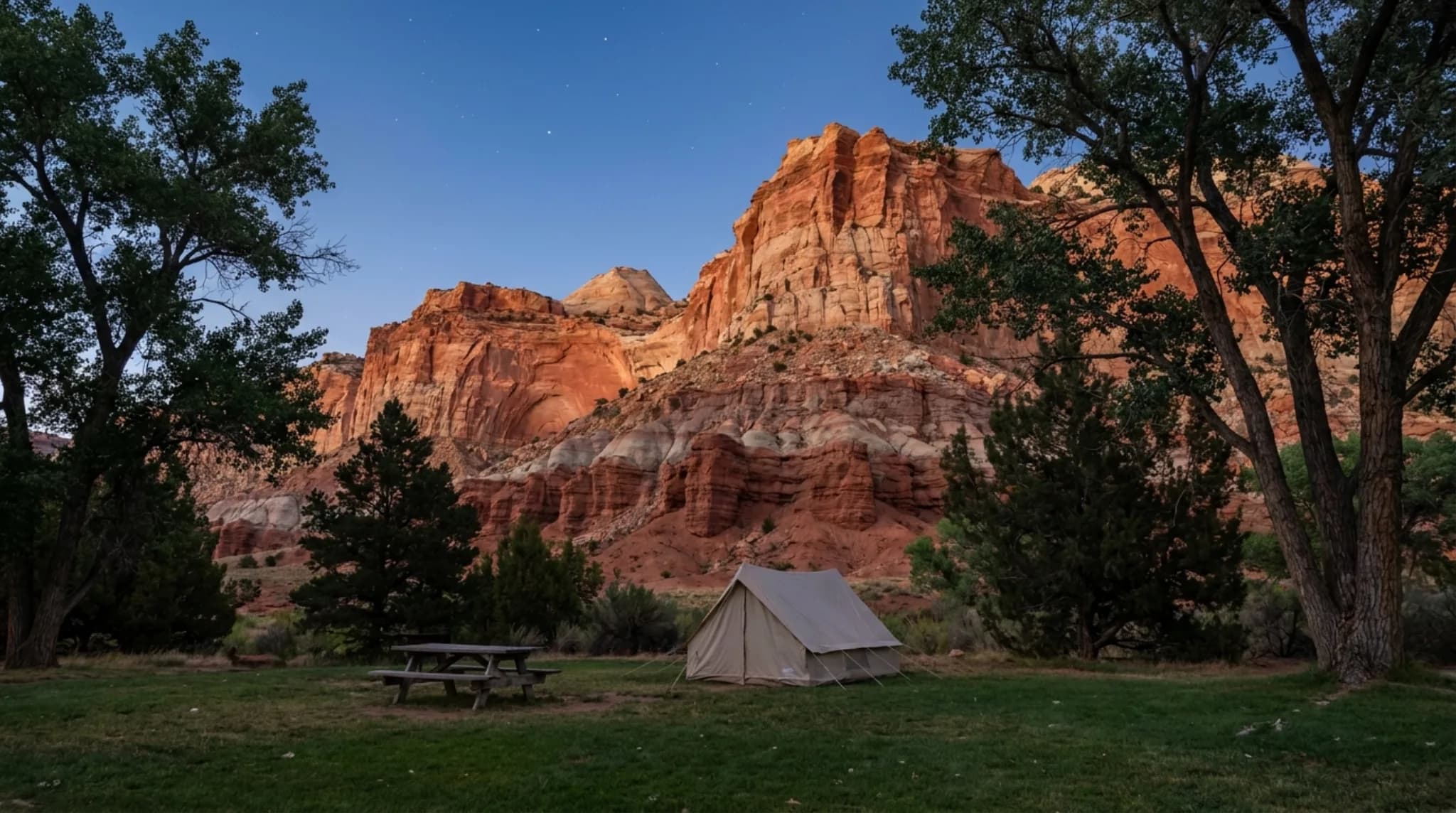
If you want to sleep out here, Cathedral Valley Campground has six sites at about 7,000 feet, roughly halfway around the loop: free, first-come, first-served, with a pit toilet, a picnic table and fire grate at each site, and no water. Backpacking anywhere beyond it requires a free backcountry permit from the visitor center. The full picture of camping in and around the park is in our Capitol Reef camping guide.
Best Time to Go
Spring and fall are the reliable windows: mild temperatures, longer odds of dry roads, and low sun for more of the day.
Summer complicates the trip twice over. Heat is the obvious problem in an exposed district with no water. The less obvious one is the monsoon: the Park Service puts flash flood season at roughly mid-June to mid-October and advises checking the National Weather Service flash flood potential rating each day before visiting. A storm you never see can close the ford behind you and turn the clay roads to grease.
Winter can be superb when a dry spell has the roads open, but snow and mud close them for long stretches, and the campground, while technically open year-round, is often unreachable. In every season the answer is the same: the conditions check the morning of the trip is not optional.
Photography
The Temples of the Sun and Moon are the photograph, and they are a low-light subject. In the middle of the day they flatten into brown against blue; early and late, the Entrada Sandstone goes deep orange and the valley floor holds long shadows that give the monoliths their scale.
The logistical problem is that the Temples sit 17 miles up a slow dirt road from the Caineville end. Being there at first light means either camping at the campground the night before or starting from the pavement in the dark. If you are day-tripping, drive the loop counterclockwise, Cathedral Road first, to reach the Temples earlier in the day, or accept late-afternoon light and budget the remaining hours of the loop carefully.
Glass Mountain rewards side light for the same reason: the selenite reads as glitter when the sun is low and as grey rock at noon.
What to Bring
The Park Service's own carry list for this drive: plenty of water, food, gas, adequate clothing, a shovel, and emergency supplies. In practice, from doing this with a house 20 minutes from the park to restock from, that translates to:
A full tank and real water
Fuel up in Torrey. There is no gas and no potable water anywhere on the loop, and 57.6 washboard miles burn more fuel than the number suggests.
A shovel and a spare you trust
The Park Service lists the shovel; the road conditions explain why. Check your spare's pressure before the trip, not at the ford.
Offline maps and a told plan
No reliable cell coverage, and by the Park Service's warning, help can be hours or days away. Someone at home should know your route and your out-time.
Layers, sun cover, and lunch
The campground sits near 7,000 feet. Mornings are cold in any month, middays are exposed in every month, and there is nowhere to buy anything.
Our packing guide covers the broader kit for this country; the loop just demands the self-sufficient end of it.
After Dark
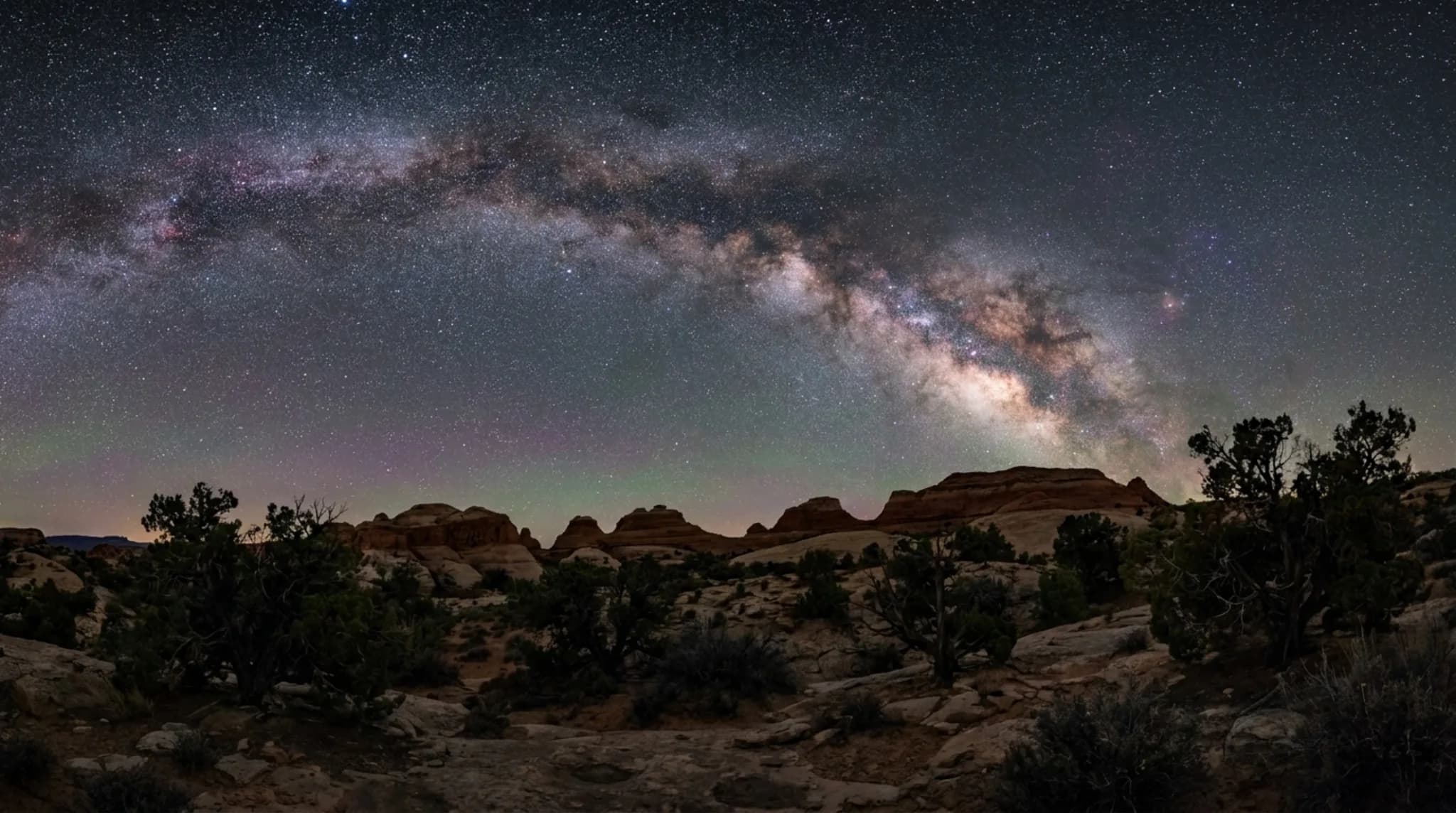
Capitol Reef was certified by the International Dark-Sky Association in 2015 as a Gold-tier International Dark Sky Park, the tier reserved for the highest quality night skies, and the empty north of the park is as dark as it gets. A night at Cathedral Valley Campground puts the Temples under that sky, and the Milky Way over an Entrada monolith is worth the pit toilet.
For a day trip the honest advice is different: do not plan to linger past dusk. The drive out is slow dirt with a river ford at one end, and none of it improves in the dark. If the night sky is the point, camp out there, or watch it from somewhere with pavement under you. Teasdale and Torrey sit under the same protected sky, and our guide to Utah's dark sky places lists every certified site in the state.
Frequently Asked Questions
How long does the Cathedral Valley Loop take? The National Park Service says the 57.6-mile loop requires 6 to 8 hours to complete. That is driving time on rough dirt roads plus stops at the overlooks and the Temples of the Sun and Moon. Treat it as the whole day, not a morning.
Do you need 4WD for Cathedral Valley? Not always, but you always need high clearance. The Park Service states that high-clearance vehicles, even without four-wheel drive, can usually negotiate the roads, and that 4WD may be necessary after rain or snow. Its campground page is stricter and calls high-clearance 4WD usually necessary. ATVs and UTVs are prohibited in the park.
How deep is the Fremont River ford? Normally a foot or less, over a hard-packed rocky bottom, according to the National Park Service. The ford sits near the start of the Hartnet Road, and the Park Service says plainly not to attempt it during floods or high water. Conditions change, so check with the visitor center first.
Is there a fee to drive Cathedral Valley? No. Capitol Reef's entrance fee applies only to the Scenic Drive past Fruita Campground, so the Cathedral Valley Loop sits outside the fee area. A free backcountry permit is required only if you camp away from the campground overnight.
Can you camp in Cathedral Valley? Yes. Cathedral Valley Campground has six free, first-come, first-served sites at about 7,000 feet, roughly halfway around the loop. There is a pit toilet and no water. Backpacking beyond it needs a free permit from the visitor center.
When is Cathedral Valley impassable? Whenever the roads are wet. The clay in these roads becomes slick and gummy after rain or snow, and the Park Service lists segments as impassable on its current conditions page when that happens. Call 435-425-3791 or check that page before committing to the drive.
Distances, time estimates, vehicle guidance, ford conditions, campground details and fee rules are as published by the National Park Service for Capitol Reef National Park. Road conditions change with every storm: confirm on 435-425-3791 or the park's current conditions page before you drive. If you are basing in the gateway towns, our place in Teasdale is about 20 minutes from the park entrance and a little over half an hour from the River Ford turnoff.